Tuesday, April 12, 2011

WHAT'S SO SPECIAL ABOUT LORD RAMA? = WHAT IS RAMA RAJYA? = WHY RAMA NAVAMI?


LESSONS TO LEARN
FROM
LORD RAMA

Today is Rama Navami, the day Lord Ram (or Rama) was born in Kritha Yuga, when five great celestial Planets (Grahas) were in their ascendancy, giving the one, born on this day, great power to remove the difficulties, sorrows and problems of all people.

Of the ten incarnations of Lord Vishnu, the incarnation as Rama is considered very special. This incarnation was not merely to kill the daemon Ravana – but also to set certain standards of human excellence.

FEARLESSNESS

Navami, the day of birth of Rama, is said to be - Brave man’s Birth day. And, Rama was the most Fearless warrior of his time, and all time. His fearlessness as a warrior was of course  too well known. He made Ravana totally helpless on the very first day of his battle with him. He still pardoned him, asked him to go home, take adequate rest and come next day, fully prepared for the war. He would not kill even the most heinous enemy, if he is in a helpless state. Of Rama, it is therefore said “Ramo vigrahavaan Dharmaha”. Rama is the very embodiment of Dharma. He proved it at every stage of his life, and, in every incident of his life.

THE BELOVED OF ALL

The name Rama means one, who is loved by all and who makes all people around him happy and joyful.  To say that he had no enemies in Ayodhya is a Gross understatement. People of Ayodhya loved him as a flawless Hero and he resided in the core of their hearts. Even Kaikeyi, his father’s 4th wife, who sought his banishment to forests for 14 years, loved him a lot, till Mandhara sowed the seeds of selfishness in her heart, in favour of the enthronement of her own son, Bharata.

KINGDOM OR FOREST :
RAMA HAS NO REGRETS

Rama very gladly accepted his banishment to the Forest as a great gift from his father and from Kaikeyi to whom his father had given a blind word to fulfill. Being crowned for the Kingdom or being sent to forest for 14 years – made no difference to Rama. We all know that Lord Krishna taught Yoga in the form of Bhagavad Gita to Arjuna in the Dwapar Yug. But, long before that, Lord Rama was taught Yoga by Sage Vasishta and he himself taught it to Lakshmana.

RAMA & LAKSHMANA :

Lakshmana, Rama’s younger brother (born of Sumitra), had absolutely no second thoughts on where he would be. He would be where Rama would be – be it the forest or the kingdom. Lakshmana directed his wife to stay back at Ayodhya for all the 14 years during which he would be with Rama in the  forests, being always glad to be at Rama’s service, without any diversion of attention. And, he didn’t sleep for 14 years (!) in the service of his elder brother. Lakshmana was willing to sacrifice his life and his all, for the sake of Rama. Rama’s word was always the best music and melody in the ears of Lakshmana. Rama’s words were all that he wanted to hear and obey.

We will assume that, Lakshmana is the most ideal brother to have. Of course; but, one has to be a Rama, to deserve a Lakshmana.

We are both just half right in our assumptions.

RAMA & BHARATA (& SATHRUGHNA):

Rama’s another brother, (from kaikeyi) Bharata, for whose sake, Kaikeyi wanted the banishment of Rama, also refused to ascend the throne and went to forest to serve Rama. But Rama commanded him to take care of Ayodhya till he came back. Bharata took Rama’s footwear on his head, and keeping the footwear as king, took care of Ayodhya from outside Ayodhya. He didn’t enter an Ayodhya, devoid of Rama. Bharata wass no less a devoted brother than Lakshmana.

Sathrughna, the other brother (through Sumitra) also did not ascend the throne. He assisted Bharata in taking care of Ayodhya.

Was Rama lucky to have Brothers like Lakshmana, Bharata and Sathrughna? Or,  were his three brothers lucky to have an elder Brother like Rama. Both are true.

A BROTHER LIKE RAMA :

It is therefore rightly said – there never was, never is and will never be a brother like Rama on earth.

In Indian tradition, it is always said that – “be an elder Brother like Rama and be an younger brother like Lakshmana.”

While all three brothers were equally devoted to Rama, Lakshmana was just more lucky than the other 2 brothers and enjoyed greater  opportunity to be near Rama, and took part in all of his travails and joys. He was also more vocal in his service of Rama and Sita. There are too many instances in Ramayana about Lakshmana’s devotion to Rama and Sita. Ramayana was all about Lakshmana – after we speak of Rama.

A HUSBAND LIKE RAMA :

It is some times said – Sita’s only fault in her whole Life was – not listening to Lakshmana’s words for just once in her life and talking ill of him just once, in very intemperate words.

That gave the daemonic Ravana an opportunity to send out both brothers on a false trail and take Sita away from them. Sita could not come out of that one sin for the rest of her life.

The crossing of Lakshmana Rekha is proverbial; but non-understanding of its significance; not knowing where the Lakshmana Rekha lies in her life; and what lies beyond that -  continues to be the problem of many a woman in distress, from that day to this day. Sita did not commit any other sin in her life.

Rama was the best, most ideal, loving husband. Sita was of course, the most devoted and loving wife; If an ideal couple is to be mentioned, it is usual to mention Rama and Sita. Rama could never think of a woman other than Sita. Rama could also not think of a life without Sita. After Ravana carried her away, many times, Rama was in such a depressed mood as to think of even suicide. But for Lakshmana’s consoling and encouraging words, Rama’s condition without Sita was extremely pathetic. If there was one weakness in Rama, it was his love for Sita. It was an all-consuming weakness, which manifested first when Ravana carried away Sita and a second time, when Rama himself had to send her away to forest after becoming a king.  Both times, his suffering was pathetic.

It is wrong to assume that Rama and Sita did not at all enjoy their life. They enjoyed their life for several long years. But, the story of Ramayana does not talk much of such uneventful years. It is like the melodramatic serials, where you see and listen to the out-of-ordinary incidents much more.

It is often said – where Rama is, there Ayodhya is. This is so, not only for Sita, but also for Lakshmana and all other brothers. But admittedly, it was bound to be much more so, for Sita, an adoring wife. She preferred staying in the most dangerous forests in the company of Rama – compared to the luxurious life of the rich princess in Ayodhya without Rama. No amount of reasoning by Rama could alter her decision to stay with Rama. And, Sita and Rama lived their happiest period together in the Forests – even as Lakshmana was guarding them and serving them all along.

So, what was so great about Rama and Sita as a couple? Are there are not so many couples even today in forests? What was special about Rama and Sita?

ONE WORD, ONE ARROW & ONE WIFE

Rama was the first person in Indian Mythology to set a standard among human beings, specially among kings, that one king must have one wife only. His father, Dasaratha, also had many wives. But, not Rama. Rama was the first king who followed the principle – one word, one arrow, one wife.

Come what may – (i) Rama would not backtrack, after giving his word; (ii) Rama would not use a second arrow for  the same purpose; and (iii) Rama would abide by his one and only wife, Sita, all his Life.

This came to be called “Aeka Pathni Vrath”, or, the principle of one man and one wife.  This principle was not there before Rama.

Though subsequently also, this principle was not followed by many kings; by and large, this principle came to be admired and followed by people. Today also, this principle has become the ideal in vogue in Hindu India. Very few Hindus have a second wife today – not because of law – but because of Lord Rama’s excellent example.

RAMA & HIS FRIENDS :

Look at his most admired friend:
1.     Sabari, the old tribal lady in the forests, who feeds him with fruits tasted first by herself. She is the dearest devotee to Rama.
2.     Guha, a tribal chieftain, who takes him across the river. He was embraced by Rama as his most bellowed friend and brother.
3.     Jatayu, the bird king – who was slayed by Ravana, was so dear to Rama.
4.     The monkey kings and soldiers, following Sugreeva – were of course, his most trusted friends and soldiers. Rama Prays to Lord Brahma and brings back all the killed vanara soldiers alive, at the end of the war.
5.     Jaambavanth, the king of bears was another great friend.
6.     Vibheeshan, the brother of Ravana became his close disciple and friend.
His circle of friends on earth thus comprised of the lowest of the low, though the highest of the high came to him when necessity arose.

RAMA, THE IDEAL KING :

It is difficult to find a role in which Rama did not set the highest standards of excellence.

But, Rama, the king, was the best. Till today, Rama Rajya is the ideal that Indians long for. It was a kingdom, where there was no fear of crime or criminals; where there was no fear of enemy countries; where there was no fear of draught, cyclones or floods; where agriculture flourished and food was abundant; where people followed Rama’s path and lived happily. Where arts and crafts flourished; where people got justice immediately from Rama, even in smallest things and felt happy for it. Rama had an efficient system of gathering reliable information on public affairs and acting on it promptly.

IDEAL KING vs IDEAL HUSBAND :

What happens when two roles clash in life? Rama was the Ideal King and also the ideal Husband. What happens if there is a clash between the two Roles?

In the west, it is said – Caesar’s wife must be above suspicion. This principle was followed much earlier  by Lord Rama. It was just fate that Ravana abducted Sita to his island kingdom – but, she remained chaste and pure even there for 14 years, until Lord Rama killed Ravana. But, Lord Rama, the King, knew people will talk ill of Sita. And Sita was not just any ordinary woman but the queen of Ayodhya. 

She had to be above suspicion; else public morality was difficult to maintain and sustain. Sita had to prove her chastity in presence of all people in Lanka. The Lord of Fire himself came and pronounced her Chastity, to the relief of all. True. But, this happened in the far away island of lanka, but, Sita was the queen of Ayodhya! 

People in Ayodhya still did not know what happened to Sita; and just one washerman talked ill of Sita! He said – Sita was in some one else’s house for 14 years – and today she’s the queen! 

Lord Rama had to do justice to his Role of King, sacrificing his role as Husband of Sita; He had to abandon Sita again in deep forests, knowing her chastity well, just to maintain public morality and confidence. 

This is matter of huge controversy till this day. Can a king abandon his chaste wife like that, knowing her purity so well? That too, just on the washerman’s stray words?

A King has to. He has no other way. He is not an ordinary man. He is the leader. His conduct has to be pure and also appear to all to be pure. He has to make all sacrifices for this purpose. The crown sits on his head – just to remind him of this responsibility – and not as an ornament. Crores of people mould their conduct looking at his conduct. The Dharma of the Individual has to be different from the Dharma of the King to this extent. The Dharma of the King overrides the Dharma of the Individual in him.

Rama loved his wife. But, his duty as a king is higher than his duty as the husband of his wife. Rama’s wife has to be above suspicion; and Rama’s duty as King has greater priority compared to Rama’s duty as husband. This was established by Lord Rama, at a great personal suffering. But, this came to be followed by many kings subsequently too.

Is Rama and Incarnation of God? Yes. He is. If Buddha is; if Christ is; if Krishna is – Rama is definitely an incarnation of God. If not – does it matter? His ideals are the best ideals – to this day. If we follow them; the world will be a lot more happier, joyful and peaceful place.

Yours
= Vijayamohan.V

 *   *   *   E  N  D   *   *   *

Monday, April 11, 2011

SWAMI DAYANANDA SARASWATI = THE TEACHER OF TEACHERS = OF ARSHA VIDHYA = OF SEVA = OF RELIGIOUS HARMONY


SWAMI DAYANANDA SARASWATI

THE TEACHER OF TEACHERS
OF SPIRITUALITY

Year 1930 (15th, August) saw the birth of an illustrious son of India in a small village called Manjakkudi in the Tanjore district of Tamilnadu. He was named Natarajan. Like any great saint, his inner voice also was urging him to find the ultimate truth of existence. It is always almost the same story for many of these great saints.

He went off to seek the knowledge of the self under great Gurus like Sri Swami Chinmayananda, Sri Swami Pranavananda and Sri Swami Tarananda Giri.
Having acquired the required Vedantic Knowledge, the Swamiji saw that “there is nothing as purifying as knowledge.”

He therefore started sharing his knowledge with many disciples. Now, there are more than 200 disciples of his , all renunciates, many of them great teachers in their own right today. This writer (of this blog) attends the classes of one such great disciple of Shri Dayananda Sarawati, namely, Shri Paramarthananda,

The Swamiji established the Swami Dayananda ashram in Rishikesh during the 1960s. Swamiji and his disciples conduct regular residential courses at the ashram with the focus on Bhagavad Gita and the ten principal Upanishads as commented upon by Adi Shankaracharya. These and selected ancillary texts are analyzed and taught along with Sanskrit grammar in the Paninian style. Vedic chanting is also taught during courses.

He founded the Arsha Vidya Gurukulam, in 1986 as an institute for the traditional study of Advaita Vedanta, Sanskrit, Yoga, Ayurveda, astrology, and other classical Indian disciplines. Swami Dayanada Ashram is like the parent Gurukulam for Arsh Vidya Gurukulam.

He is now about 81. Therefore, between July 20 to 22, of this year, his disciples intend to perform his Satabhishekam at Coimbatore,as we can see from the web site www.Sathabhishekam.in.

This Sathabhishekam is an opportunity to all those who have always wanted to express their gratitude to Sri Swami Dayananda Saraswati for having influenced their lives in some way or the other.

The books written by him, the trainings he conducted to his disciples, the lectures he and his disciples deliver all over the world are all extraordinary initiatives in the dissemination of self knowledge, or Vedantic knowledge.

Some of the web sites containing detailed info on the Swamiji, his disciples and his / their lectures are given below :

/www.arshavidya.in/
/www.aimforseva.org/
/www.satabhishekam.in

His lectures are full of great knowledge relevant for day to day life and for the life beyond.

One of his constant messages is – “one must grow from being a consumer to become a contributor.” He exhorts all disciples and audience to become contributors to the mankind and nature and not just be consumers.

I am, therefore I think, says Swamiji, though he says, I think, therefore, I am can be a starting point for arriving at I am, therefore I think. In between 2 thoughts, you do not think. Yet, You are, he points out.

His disciples include not only Hindus but also many foreigners. His advice to all is to perform Seva – for all beings. He has played vital role in many inter-religious conferences and has spoken fervently for bringing in religious harmony.

Readers would be greatly elated to listen to his lectures and discourses, many of which are available at the web sites cited and on you-tube.

PS :

Swami Dayananda Saraswati, this illustrious spiritualist of our times  is not to be confused with another illustrious Indian, spiritualist-cum-patriot, Swami Dayanand Saraswati who was the founder of Arya Samaj, who lived from 1824 to 1883.

This blog bows down before the Swamiji and wishes him a long, long life,  for all of our benefit (of the mankind as a whole).

Yours

= Vijayamohan.V

 *  *  *   E  N  D   *   *   *

Thursday, April 7, 2011

PATANJALI YOGA SUTRAS = POST-12 :VERSE.12 = PATANJALI, LORD KRISHNA & ADI SANKARA ALL EMPHASIZE ONLY 2 WAYS FOR MIND CONTROL


PATANJALI
YOGA SUTRAS

POST-12

CHAPTER.1 : SAMAADHI PAADHA

Summary of
First 11 Aphorisms : Practical Aspects

Patanjali, as we have all seen, is very BRIEF. He doesn’t use one word more than what can convey the briefest possible Indicator meaning. So, here are the practical aspects  from the first 11 Verses.

Be in the Now; Be in the present. This is an essential part of the discipline of Yoga.

Practice Yoga as a Discipline. Be a devoted disciple of the discipline of Yoga.

Work on the mind and master it. Yoga works on the Mind. Do not remain the servant of  the mind.

Be a witness. This restrains the mind. As witness who has restrained the mind – you will stand in your true form. If you do not restrain the mind and master it – you will be the slave of Chittha Vritthis and assume you to be them.

Your Mind works in five types of Vritthis, some times, these are painful and some times, these are painless.

These are (1) right Knowledge having valid proof; (2) wrong knowledge without valid proof; (3) Delusion / fantasy (4) deep (dreamless) sleep and (5) remembering or recall.

Right knowledge comes to us from (i) Direct Perception; (ii) Sound Reasoning and (iii) Scriptural testimony and other competent evidence. All Sciences come from right knowledge.

Wrong Knowledge is - perceiving a thing as some thing that it actually is not. This arises from the weaknesses of our sense instruments; the fickleness of the mind,  nature of external environment; our habits; time and space effects; and many such reasons.

Fantasies or Delusions :Some times, sounds we hear are likely to mislead us into various fantasies and delusions in the absence of any real object to support such imagination or fantasy. Internal confusion, negativity and substances like LSD etc are causes of fantasizing.

Dreamless, deep sleep is also considered a Chittha Vritthi – since, we feel the freshness effect of that sleep, after we get up. Dreamless sleep equalizes all, the king, the beggar and all those in between. All support for other chittha Vritthis must fall – for deep sleep to ensure. It is as if a superior force is carrying you into itself for rejuvenating you.

Memory : What has once been learned and experienced, may be recalled again and again by the Chittha, when it needs it, or even, when it does not need it. This happens as long as these experiences are not lost in the memory or otherwise changed by some other experience.

In final analysis – Chittha Vritthis are –

(i)                  Storage processes for knowledge (right  and wrong),
(ii)                 Swinging between past memories and future fantasies and
(iii)                Deep, dreamless sleep.

Do you find any thing else, which Patanjali has not found? When is the Chittha in the Present; or, in the Now?

We all know, that NOW is the only time, when we actually live. But, mind does not want to stay in the NOW and is much afraid of staying in the NOW. Unless the five Chittha Vritthis are totally controlled, and restrained, there is no way, mind stays in the present. But, we have seen earlier, that mind is too strong but fickle for us to control. It doesn’t easily obey us. Then, how to make the mind obey us? Let’s see now :

Aphorism.12

abhyaasa vairagyabhyam tannirodhah

abhyasa = by repeated practice
vairagyabhyam = by non-attachment, by dispassion
thath = of that or those
nirodhah = control, master, quieten

Through (i) repeated practice and (ii) non-attachment to them – all the five Chittha Vritthis (thought patterns / modifications) can be restrained or regulated and mastered.

Lord Krishna also mentions these two great weapons only for controlling the mind and its modifications.

We want to regulate and restrain each Chittha Vritthi. This must be practiced consciously, all the time. Again and again, the mind will go back to its uncontrollable ways. Again and again, we must bring back the mind within our control.

Patanjali has already indicated one very effective way of practice. Be a witness. Stand behind the thought-filled mind and watch what the mind is doing. The moment, the witness starts watching – the mind’s power comes down drastically. As the witnessing progresses, the mind’s wayward ways shrink gradually and it begins to take orders from you (first from Buddhi, who starts the witnessing process; and then from the Self, who takes over the witnessing process).  But, again and again, mind goes behind the thoughts which keep on arising in it. Suddenly, you find that you have forgotten the witnessing process you started and are again identifying with some thought process.

There is a confusion in many people as to who is the witness? Is it not also a thought? How can a thought in the mind control other thoughts in the mind?

Do not worry about such questions. You can be a witness. The moment you try to be a witness – you know you are a witness now. No one needs to prove it to you. Now, it is your experience. You know, you are a witness of thoughts created by the mind. Never mind, if mind starts the process of witnessing. Finally, if you persist in the witnessing – you also know that from mind – control is passing to Buddhi, from which, the witness function goes to the self. The Self now stands in its own true form. To bring us to this stage only, the whole science of yoga is intended.

As a beginner, either you are yourself the THOUGHT; or, you are yourself the  WITNESS. You are switching roles between the two roles very frequently.

Witnessing  requires great care, caution and also consistent practice.

Becoming a Thought – is however a very unconscious process. One moment of non-witnessing makes you go behind the thought and become the thought yourself.

So, a supportive weapon also is needed to strengthen you. That weapon is NON-ATTACHMENT, or, Dispassion. Suppose, you develop non-attachment to sense-objects and they cease to interest you, that non-attachment supports your efforts in being an efficient witness and thereby control the thought modifications. This also is a gradual process as below explained.

You must replace your strong Thaamasic temptations with strong Raajasic temptations initially and thereafter with strong Saathvic temptations.

You must replace thaamasic food with raajasic food and then with saathvic food.

You must surround your life with Sathsang – i.e., strong friendships of the wise and the learned. Adi Sankaracharya emphatically says – that sathsang leads you easily to non-attachment to sense pleasures and chittha Vritthis. Lord Krishna also advocates the same measures.

Thus – there are only two measures for Mind-control. (i) Constant and consistent practice and (ii) Non-attachment.

The first one basically works on the senses and mind inside us.

But, the second one works on the Sense- objects all around us in the outside world which tempt us always.

I must repeat here – that the falling off, of sense modifications does not lead in any way to a lack of joy in our life. On the other hand, it introduces a joy of  more permanent type in our life, in place of the fleeting pleasures.
So – no one should think that (i) Practice of sense control and (ii) Non-attachment to sense objects  leads to a dry life.

It actually leads us to a permanent, infinite joy. The real test of progress in spirituality or Yoga is the continuous enhancement in your serene Joy and the falling off, of all fears.

Let us therefore understand more about these two principle weapons for Mind-control in the coming Aphorisms.


*  * *   E   N   D  *  *  *

Tuesday, April 5, 2011

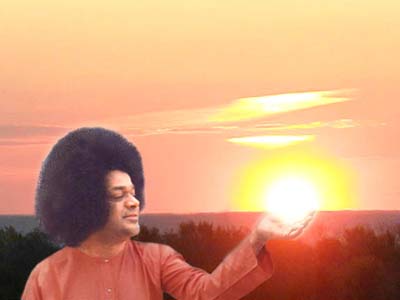
SATHYA SAI BABA = THE LIVING LEGEND FROM INDIA = WE JOIN DEVOTEES IN PRAYING FOR HIS HEALTH AND LONG LIFE


Sathya Sai Baba

The 85-year-old spiritual guru, Satya Sai Baba, was admitted to a super-speciality hospital at Prashanti Nilayam (near Anantapur, Andhra Pradesh) on March 28 in a critical condition after complaining of breathlessness. He has been on a ventilator since, but his vital systems are said to be in a stable condition. The latest medical bulletin by doctors is re-assuring. 

Leaders like Chandra Babu Naidu and Kalaignar karunanidhi have expressed their best wishes for his speedy recovery. Chief Minister Kiran Kumar Reddy has appealed to devotees not to spread or trust rumours and to maintain their calm. 

For lakhs of devotees, Sathya Sai Baba is god-like. This blog had carried some of his beautiful quotes in an earlier Post, in the URL : http://wisespiritualideas.blogspot.com/2011/02/great-quotable-quotes-from-sathya-sai.html

We can see his extraordinary but down-to-earth wisdom and his compassion for people in all his sayings. His work so far has been truly extraordinary and reaching out to the poorest of the poor.

We join all his devotees in praying for his health and long life.

May God bestow on this spiritual giant, long and healthy life.


*   *    * Ohm   *   *   *

Monday, April 4, 2011

PATANJALI YOGA SUTRAS = POST-11 :VERSE.11 = ARE WE NEVER IN THE NOW? =


PATANJALI
YOGA SUTRAS

POST-11 :VERSE.11

CHAPTER.1

SAMAADHI PAADHA

Summary Of First 10 Aphorisms :

Now, the discipline of Yoga starts, says the first aphorism. Being in the Now; in the present, is an essential part of the discipline of Yoga.

For being in such a discipline, the reader must be a devoted disciple of the discipline. He must have respect for the Guru and the Science of Yoga.

Yoga is the restraining of the mind and all its modifications; in fact, all work done in the mind. Where (outside mind or inside?) and how (by what process) do you restrain them and what happens then? This is the discipline of Yoga.

When Chittha Vritthis are restrained - the watcher / witness (the real self) returns and abides in his real form, unobstructed by the veil of Chittha Vritthis. For the first time, we perceive our real self. Patanjali has emphasized that the Self is the WITNESS and not the doer of any thing.

When the chittha Vritthis are not restrained and the watcher/ witness is not abiding in his real self, he identifies himself with the chittha Vritthis; Which means, he is not conscious of his Self.

These Chittha Vritthis are of five types. They may be either painful or painless.

These are (1) right Knowledge having valid proof; (2) wrong knowledge; (3) Delusion / fantasy (4) deep (dreamless) sleep and (5) remembering or recall.

Right knowledge comes to us from (i) Direct Perception; (ii) Sound Reasoning and (iii) Scriptural testimony and other competent evidence. All Sciences come from right knowledge.

Wrong Knowledge is - perceiving a thing as some thing that it actually is not. Wrong knowledge arises from the weaknesses of our sense instruments; the fickleness of the mind,  nature of external environment; our habits; time and space effects; effects of alcohol; negative moods like anger, desire, lust, hatred etc; friendship of the untruthful, negatively minded persons; reading books written by or listening to the spoken words of all such negative persons

Fantasies or Delusions :Some times, sounds we hear are likely to mislead us into various fantasies and delusions in the absence of any real object to support such imagination or fantasy. Internal confusion and negativity is a major cause of this. Other cause is substances like LSD. Some times, positive fantasizing about one;s own strength, beauty etc can lead people to perform better than what they normally can.

Dreamless, deep sleep is also considered a Chittha Vritthi – since, we feel the freshness effect of that sleep, after we get up. Dreamless sleep equalizes all, the king, the beggar and all those in between. All support of other chittha Vritthis must fall – for deep sleep to ensure. It is as if a superior force is carrying you into itself for rejuvenating you.

The last of chittha Vritthis, “remembering” is now to be seen :

Aphorism.11

anubhootha vishaya asampramoshah smrithih

anubhootha = some thing experienced
vishaya = the objects of experience
asampramoshah = not lost or changed
smrithih = remembering

What has once been learned and experienced, may be recalled again and again by the Chittha, when it needs it, or even, when it does not need it. This happens as long as these experiences are not lost in the memory or otherwise changed by some other experience.

But for memory or smrithi, our ordinary life becomes impossible. Whom so ever or what so ever you see, smrithi is right there to aid you to deal with it.
Smrithi is always of the past experiences.

Fantasies are always of the future, though they take the past and modify them into fantasies.

Nidraa is the cessation of both memories of the past and fantasies of the future and putting to rest, the body and the Chittha itself. Yet, it is considered a Chittha Vritthi as, Chittha refreshes itself in the process and feels it on waking up. Right knowledge and wrong knowledge are both store houses, or, data banks, recorded in the Chittha, from which memories and fantasies are drawn.

All futuristic planning and thinking is in a way, a fantasy into the future. All past is memory (or,smrithi) only. Rest of Chittha Vritthi is storing process – either right knowledge or wrong knowledge. When Chittha is done for the day, it is put into a deep, dreamless sleep. If there are dreams, they also come under memory of the past or fantasy of the future.

In final analysis – Chittha Vritthis are –

(i)                  Storage processes for knowledge (right / wrong),
(ii)               Swinging between past memories and future fantasies and
(iii)            Deep, dreamless sleep.

Do you find any Chittha Vritthi, which Patanjali has not described?

When is the Chittha in the Present; in the Now?

Is it Never?

Or, Do we start the discipline of Yoga Now? Yes. Its is Now !


*  * *   E   N   D  *  *  *